Portrait rights are not separately defined in statutory provisions, so the most accurate approach is ultimately to look at how the courts have ruled. Even when the same type of face exposure is involved, some cases are found to constitute an infringement of portrait rights, while others are deemed unlawful in principle but not legally wrongful.
In this post, we examine three actual Supreme Court rulings to summarize what the courts considered.

1. How long can a photo of a model who consented to the shoot be used?
The first case involved a model who had consented to a photo shoot but later challenged the use of the photos.
The plaintiff had entered into a contract with a company that sold jewelry online and had participated in nine photo shoots as a model over approximately 10 months. The contract stated that the photos could be posted online or exhibited, but did not specify how long they could be used. Even after the shoots had ended, the company continued using the photos on other shopping sites, and the plaintiff requested that their use be discontinued before filing a lawsuit.
The lower court ruled in favor of the company, finding that the plaintiff had permitted the photos to be used without a time limit. The Supreme Court, however, overturned that decision. It held that allowing the photos to be used indefinitely would effectively deprive the plaintiff of their portrait rights. Therefore, absent a clear agreement on the period of use, the use must be limited to a reasonable period under the circumstances of the transaction.
*Supreme Court Decision 2021Da219116, July 21, 2021
2. Is it acceptable to film someone in an apartment complex because it is a public place?
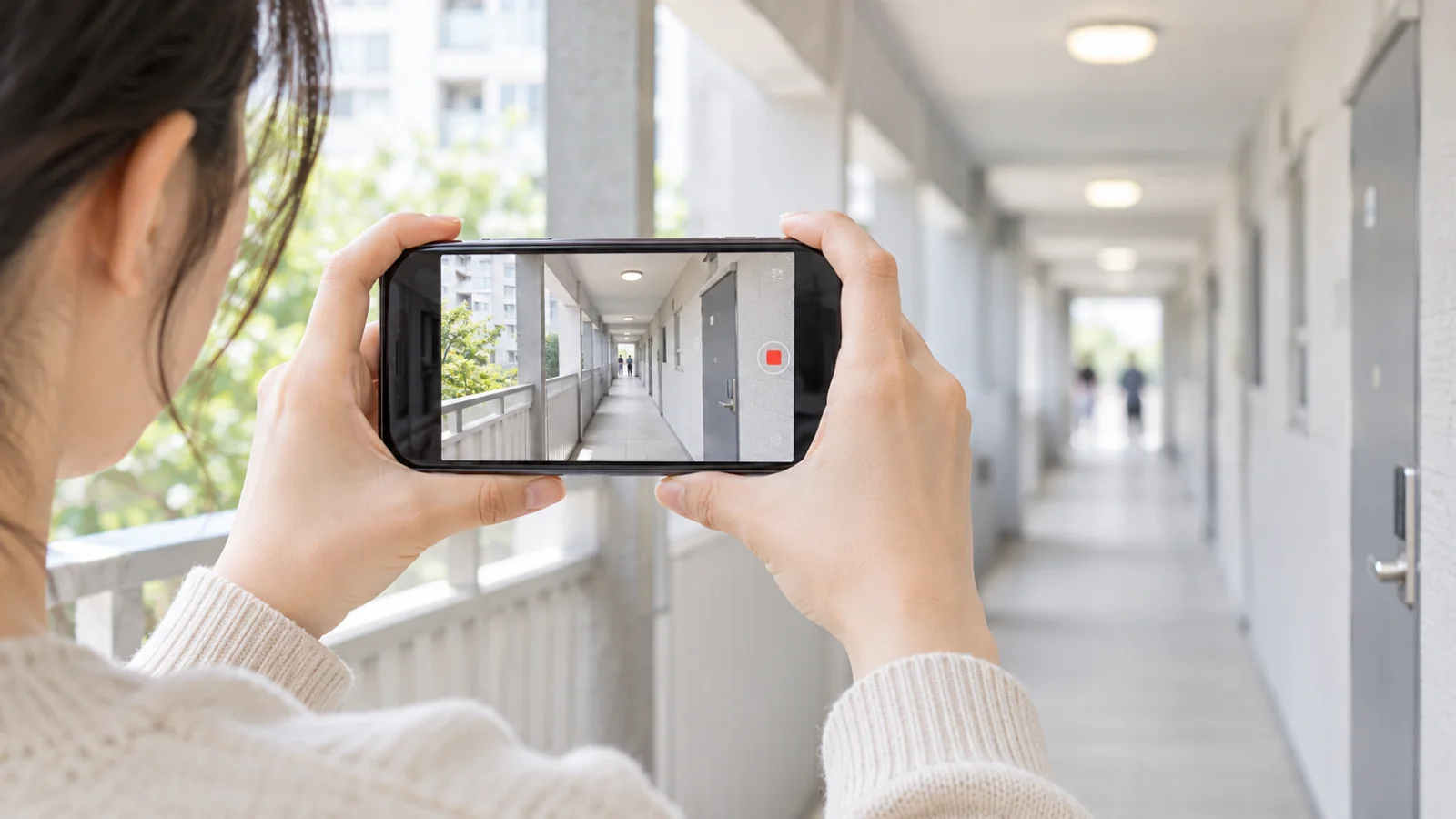
The second case involved a dispute in an apartment complex that was recorded on a mobile phone.
The plaintiff got into an argument with a neighbor over inter-floor noise and eventually assaulted the neighbor, who recorded the incident on a mobile phone. The head of the residents’ women’s association also recorded another incident in which the plaintiff hung a banner without reporting it to the management office and then got into a verbal dispute with another resident. This video was forwarded through the head of the residents’ representative meeting to the property manager and resident representatives. The plaintiff filed a lawsuit, claiming that the filming and transmission infringed their portrait rights.
The Supreme Court first made clear that an infringement of portrait rights is not justified merely because it took place in a public area or was intended to collect evidence. In this case, however, the Court found that although there had been an infringement, it was not unlawful. The Court reached this conclusion after considering that there was a need and urgency to preserve evidence of the assault for criminal proceedings, that the banner incident concerned apartment management, and that the video had been transmitted on a limited basis only to people involved in management.
In other words, the statement “It is okay to film someone because it is a public place” is not correct. The decisive factors were why the filming took place and how far the footage was distributed. This also means that the same video may be viewed differently if it is sent only to people involved in management rather than uploaded to social media.
*Supreme Court Decision 2020Da227455, April 29, 2021
3. What if someone’s face appears clearly on a broadcast?
The third case involved a person’s face being exposed in a broadcast report.
The plaintiff was the head of an organization that operated a children’s multicultural choir. When the choir was invited to perform at an event for the opening ceremony of the PyeongChang Winter Olympics, the plaintiff asked parents to pay a participation fee. During protests by some of the parents, the plaintiff was filmed with a mobile phone. Approximately 32 seconds of this footage was used in a broadcast report, with the plaintiff’s face clearly visible.
The lower court found that the plaintiff’s portrait rights had been infringed, but the Supreme Court remanded the case for reconsideration. It held that there was sufficient reason to find that the use was not unlawful, given that the plaintiff had been engaged in public activities at the time, had personally revealed their face and given an interview presenting their side on the day before the broadcast, and that the report concerned a matter of public interest.
However, this ruling should not be understood to mean that someone’s face may be used for broadcasts or public-interest purposes without restriction. The Supreme Court did not deny that the portrait rights had been infringed; rather, it reached its decision after considering various circumstances, including whether the person was a public figure and whether they had voluntarily revealed their face.

4. Common points found in the three rulings
Although the circumstances of the three cases were different, there were common factors in what the courts considered.
- Consent has limits in both scope and duration. Even if someone consented to being filmed, using the footage beyond the scope of that consent may still create a legal issue.
- The fact that someone was filmed in a public place alone does not justify the filming.
- Even where an infringement has occurred, the use may be found not to be unlawful after considering factors such as the purpose, scope of disclosure, and public interest.
From the perspective of someone uploading a video, the most practical standard is ultimately to ask, “Would this person have expected to be exposed in this way?” and “Is it really necessary to show this person’s face?” If someone’s face is not essential, covering it from the outset is a way to reduce the possibility of a dispute.
Keep only the faces you need with VideoMasker
As these rulings show, not every face in a video is judged by the same standard. There are many situations in which you want to show interview subjects or people who have given consent while covering only those who happen to appear in the background.
VideoMasker uses AI to automatically detect faces appearing in a video, allowing you to choose which faces to keep and which to cover. The mask follows faces and remains in place even as people move. After processing, you can also fine-tune the result on the timeline by adding or removing masks scene by scene.
All processing takes place within your browser, so you do not need to upload the original video containing other people’s faces to an external server. This is also closely connected to the subject of this post.
Before uploading a video, you can find more details in our previous post, “A Stranger’s Face Appears in Your Video? 5 Things to Check Before Uploading.”